A factory can have enough production capacity on paper and still struggle with long production lead times. Machines may be busy, demand may fit comfortably within the available hours, and yet orders still spend days or weeks moving through production. When that happens, the first reaction is often to look for more capacity: another machine, another shift, more operators or faster equipment.
Sometimes that is exactly what is needed. But long manufacturing lead times are not always a capacity problem. They can just as easily be a flow and coordination problem. An order may require only a few hours of actual processing and still spend several days in the factory because it is waiting for the next machine, an operator, a tool, a batch, or simply its place in the production sequence.
That distinction matters. If most of the elapsed time is waiting rather than processing, adding capacity in the wrong place will not necessarily make the order move through production any faster. Before investing in more resources, it is worth understanding where production lead time is actually created and how production scheduling influences it.
Manufacturing lead time is more than processing time
Manufacturing lead time is the time between releasing an order to production and completing it. Processing time is only one part of that journey. Between the first and last operation, an order can spend time in queues, setups, transport, batch waits and other forms of waiting. In a multi-step routing, those periods can easily become much larger than the actual machining or assembly time.
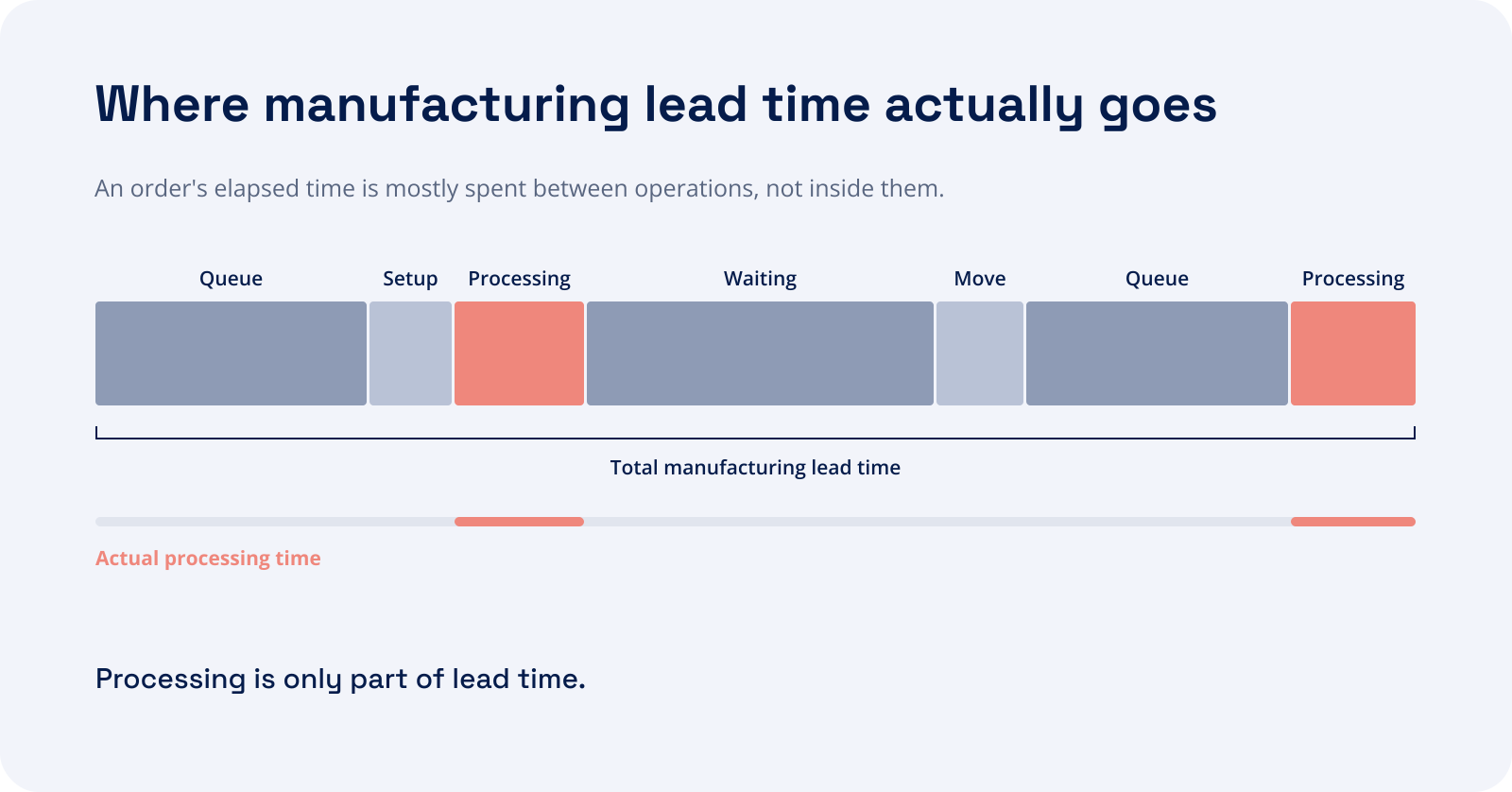
Imagine an order that needs four hours of actual processing but takes four days from release to completion. Cutting the processing time by 20 percent saves less than an hour. It does nothing about most of the time the order spends between operations. This is why improving machine speed and improving production flow are not the same thing.
A useful starting point for lead-time reduction is therefore not simply asking how fast each operation runs. It is asking where an order spends the rest of its time. Once that waiting time becomes visible, the causes often point toward queues, work in progress, bottlenecks, sequencing decisions and resource availability rather than raw machine speed alone.
Why waiting and WIP matter
Consider a simplified routing through cutting, milling, heat treatment, grinding and inspection. Each individual operation may only take an hour or two, but the next resource is rarely waiting empty when the order arrives. There may already be several jobs queued in front of the milling machine. Heat treatment may run in batches. Grinding may require a specific operator or fixture. Inspection may only be staffed during one shift.
The processing times have not changed, but the elapsed time between the first and last operation has. This is also why work in progress and lead time are closely connected. Little’s Law describes the relationship between WIP, throughput and lead time: for a stable system, WIP equals throughput multiplied by lead time. If throughput remains broadly constant while more work is released into the system, that work has to spend longer in the system on average.
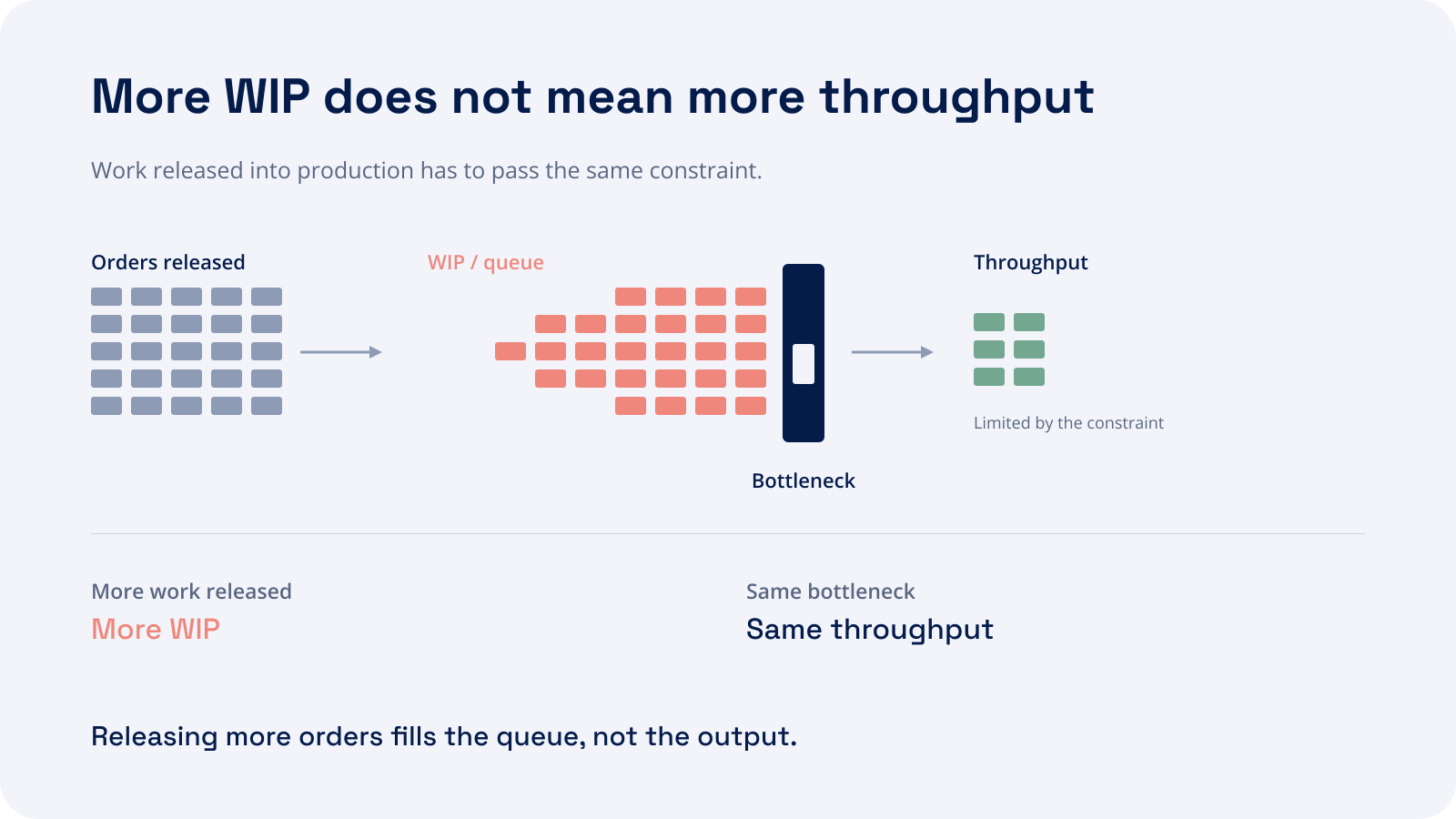
This can be counterintuitive on the shop floor. Releasing more orders can make resources look busy and create the impression that production is moving faster. But if those orders simply join queues in front of constrained resources, throughput does not necessarily increase. WIP increases, queues get longer, and production lead time can rise with them. The financial impact of these scheduling effects goes beyond lead time: WIP, throughput, overtime and capacity utilization are also major drivers of the ROI of better production scheduling.
Why “enough capacity” can be misleading
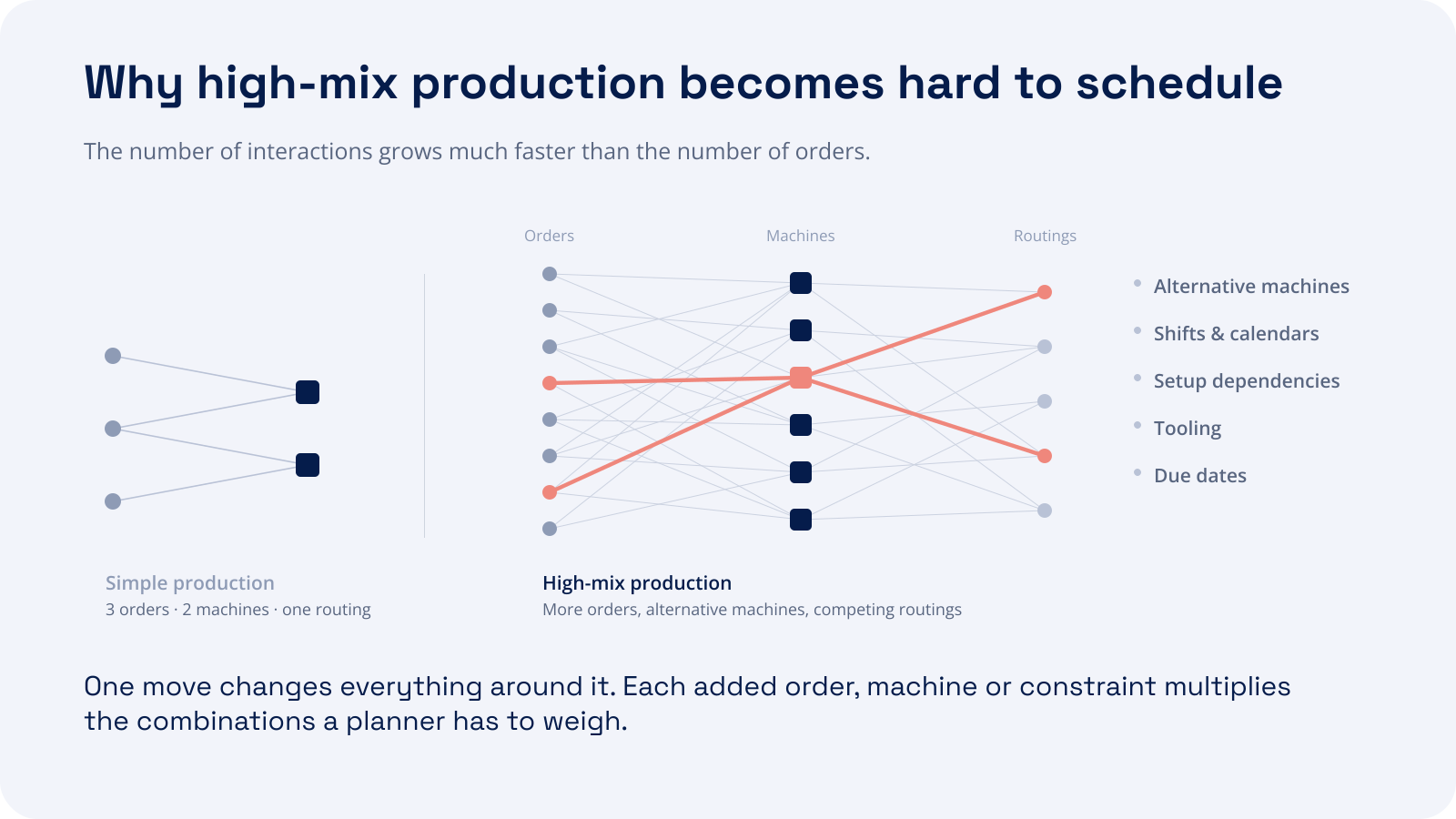
Aggregate production capacity numbers can hide this problem. A plant might have 2,000 available machine hours in a month while confirmed demand requires only 1,700. At first glance, there appears tobe more than enough capacity. But an individual production order does not need generic machine hours. It needs specific resources at specific points in its routing, and those resources have to be available at the right time.
Suppose Order A runs through M1, M3 and M5, while Order B requires M2, M3 and M4. M1, M2, M4 and M5 may all have spare capacity, but both orders depend on M3. If M3 is already heavily loaded, both orders can wait even though the factory has spare capacity overall. In a real production environment, the picture becomes more complex once shifts, operators, skills, tooling, maintenance, setup requirements, alternative machines and due dates are added. A factory can have enough capacity in total and still not have the right capacity available for the right operation at the right time.
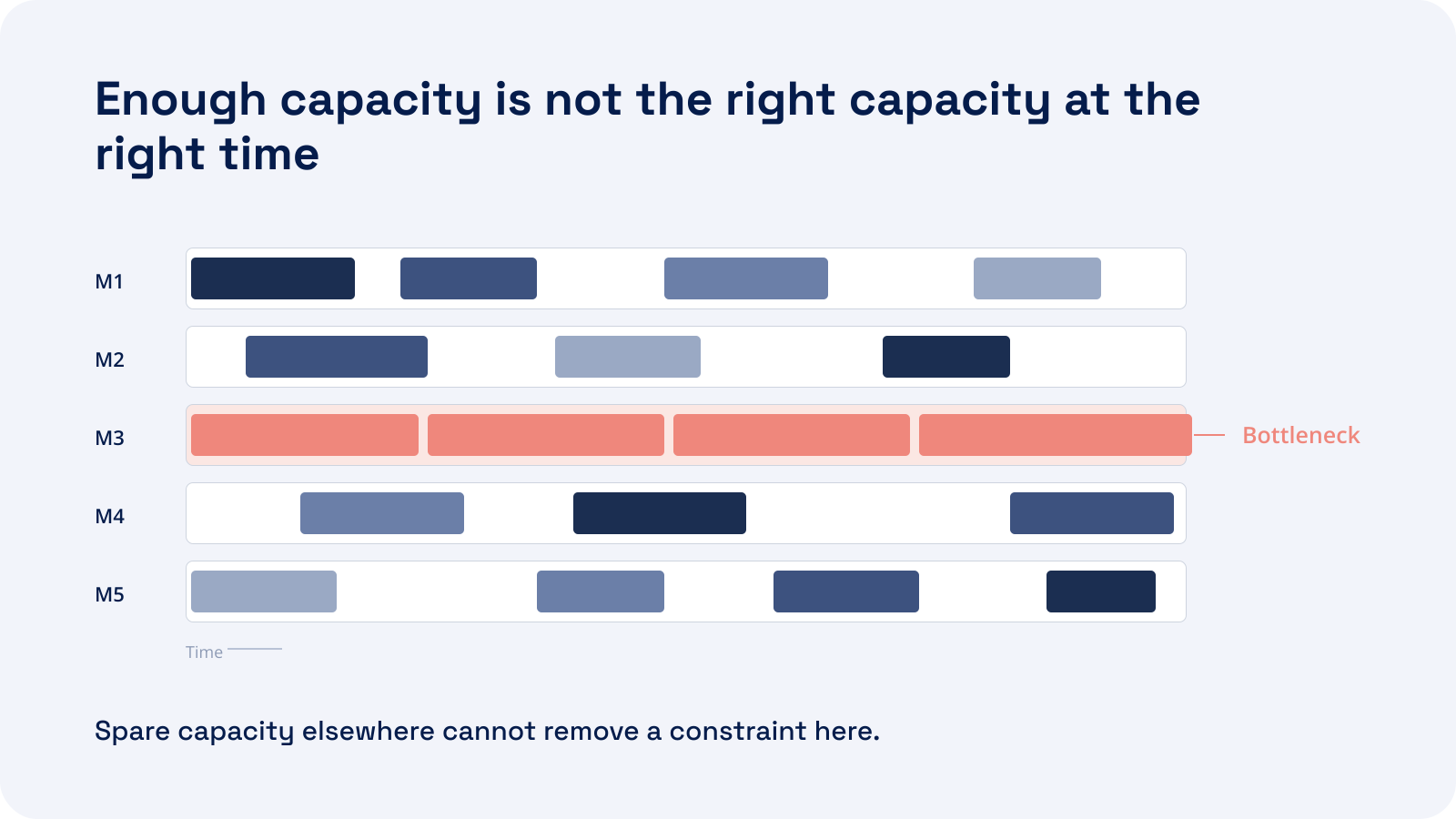
This is the difference between looking at capacity as a monthly total and looking at whether production can actually be sequenced through finite resources. Capacity planning may show that the required hours exist somewhere in the system. Detailed production scheduling has to determine whether each operation can realistically run on the required resource, in the required sequence and early enough to support the order’s due date.
Bottlenecks determine flow, not average utilization
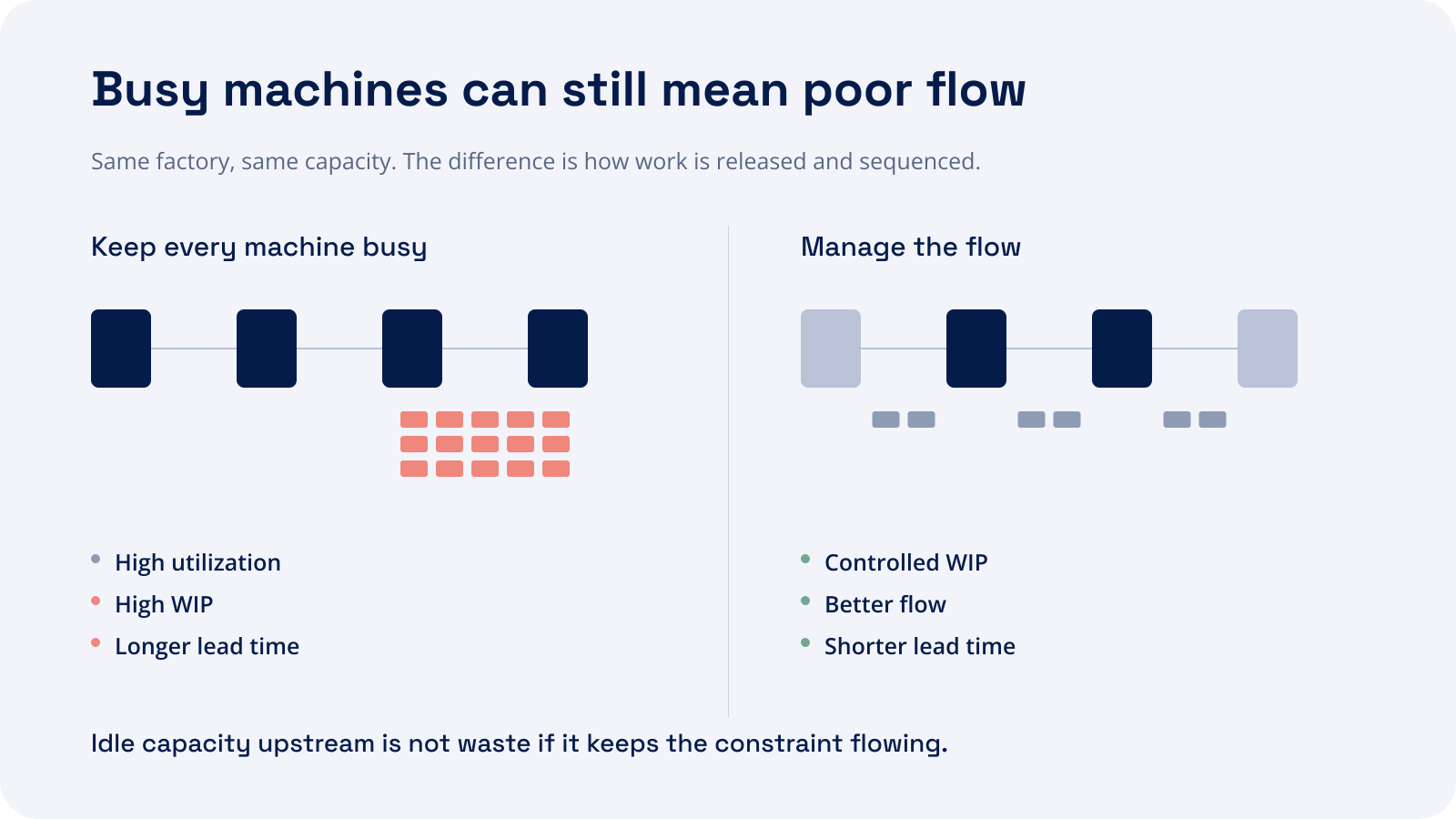
Not every resource affects production flow equally. If one constrained resource determines how quickly work can move through a routing, increasing output somewhere else may simply create a larger queue in front of that production bottleneck. An upstream machine that can produce twelve units per hour does not make the factory produce twelve finished units per hour if the next critical operation can only process eight. Running the upstream machine continuously produces eight finished units and a growing queue.
That is also why maximizing utilization on every machine can be misleading. A resource can look highly productive locally while the overall production system becomes slower. The additional WIP has to wait somewhere, and that waiting becomes part of production lead time. For plant leaders and OpEx teams, the more useful question is not whether every machine is busy, but whether the production system is flowing toward the required output and delivery dates.
Production bottlenecks are also not necessarily permanent. Product mix changes, different orders follow different routings, setup requirements shift, operators or tools become unavailable, and new priorities enter the plan. The resource constraining flow this week may not be the resource constraining it next week. That makes bottleneck management a dynamic scheduling problem rather than a one-time exercise in identifying the slowest machine.
How scheduling decisions create or reduce waiting
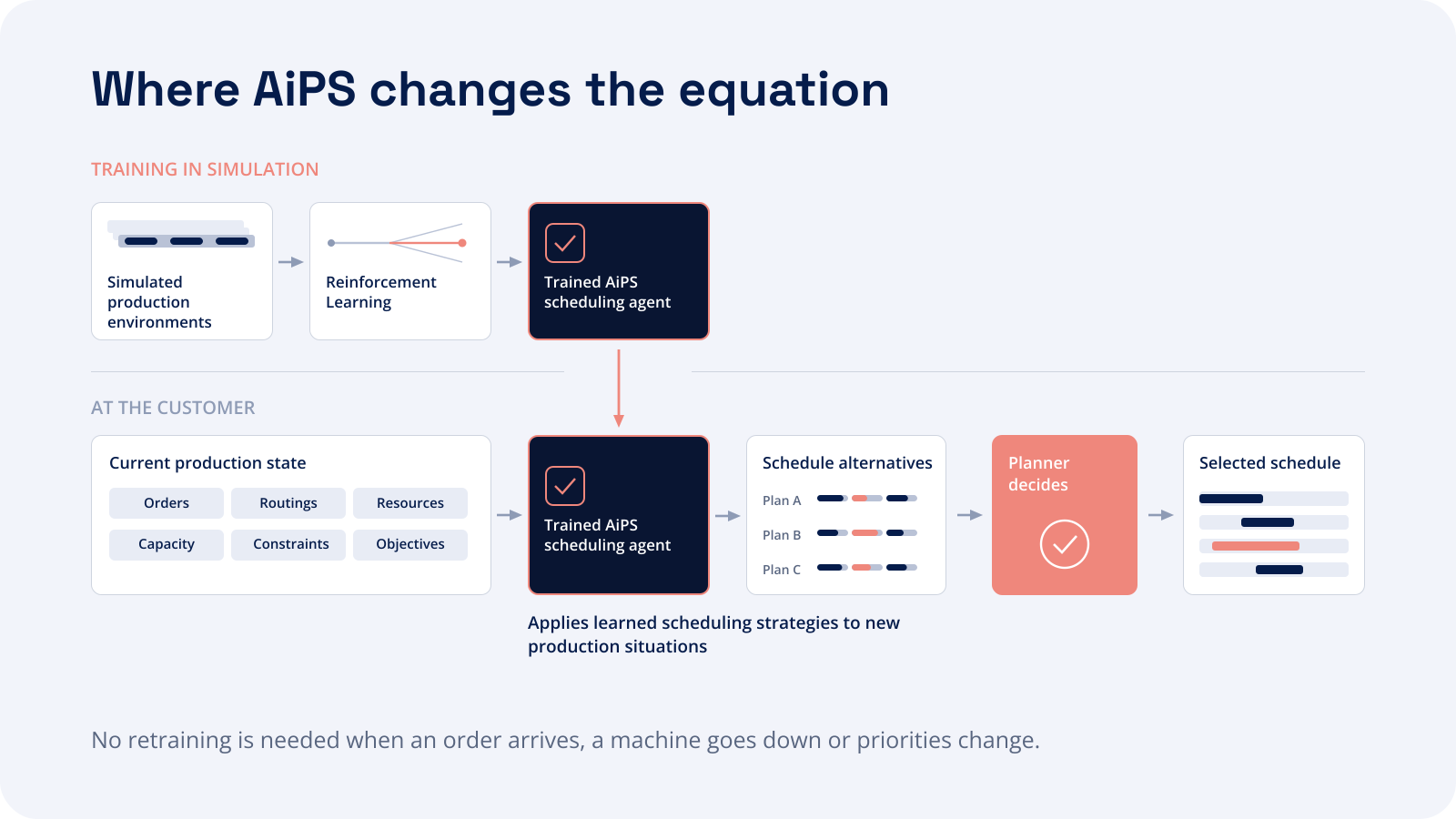
Once processing speed and total capacity are ruled out as the only explanations for long lead times, production scheduling becomes much more important. Scheduling determines which order runs on which resource, in which sequence and at what time. Those decisions directly affect how long jobs wait, where queues build and which resources become overloaded.
Sequencing is a simple example. Two orders may require the same machine, but the order in which they run changes the queue behind them and can determine whether either order meets its due date. Setup decisions create another trade-off: grouping similar jobs can reduce change overtime, while moving an urgent order forward may protect one delivery date at the cost of additional setups and delays elsewhere.
Resource assignment matters in the same way. An operation may be feasible on several machines, but choosing one machine changes its future load and availability. Releasing orders too early can increase WIP without increasing throughput. Alternative routings can avoid an overloaded resource but create a new constraint somewhere else. And a rush order never moves forward in isolation — other operations have to move around it.
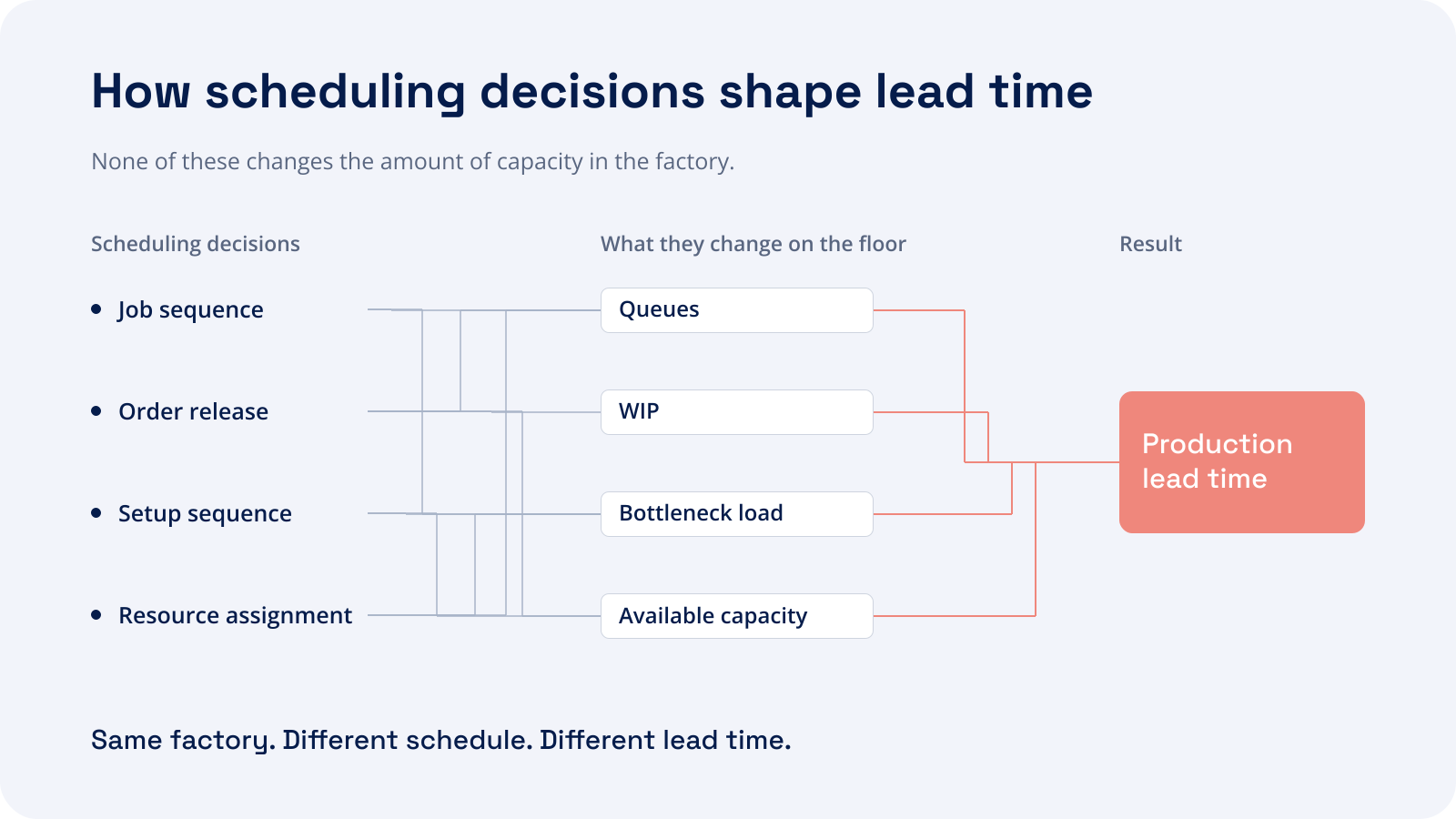
None of these decisions changes the theoretical amount of capacity in the factory. They can, however, change the time an order spends moving through it. This is why reducing manufacturing lead time is not only a capacity-improvement problem. It is also a production scheduling problem.
Why adding capacity does not always reduce production lead time
When production lead times rise, adding capacity is an understandable response. It can also be the right one when a genuine structural constraint is limiting output. But additional capacity only improves flow if it addresses the resource or constraint that is actually creating the delay. Adding a machine to a work center that regularly has spare capacity will not remove a queue somewhere else. A Saturday shift will not solve a tooling constraint. A faster machine may save minutes of processing while orders continue to wait for days at another operation.
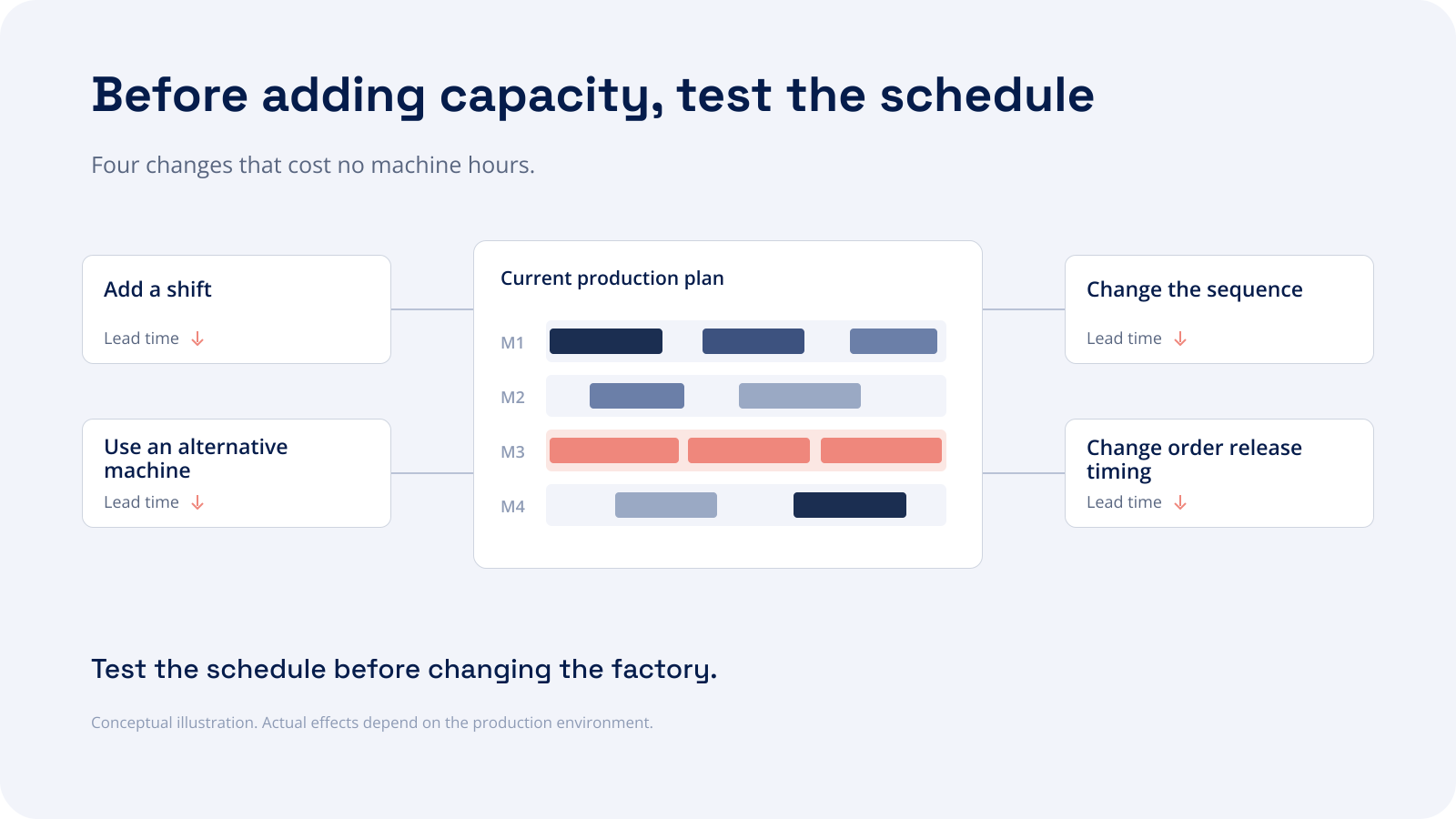
Before making the investment, it is therefore useful to test the operational question behind it. What happens to production lead time if an extra shift is added? What happens if work is moved to an alternative machine? What if the production sequence changes, batch sizes are reduced, or orders are released at a different time? If a scheduling change produces a meaningful improvement without changing physical capacity, the problem was not simply a lack of machine hours.
This does not make capacity investments unnecessary. It makes them more informed. The objective is to understand whether the factory needs more capacity, different capacity, or better coordination of the capacity that already exists.
What better production scheduling changes
A useful production schedule does more than fill empty machine slots. It coordinates the flow of work across finite resources while respecting the constraints that determine what can actually happen on the shop floor. That includes machine capacity, routings, shifts, operator availability, setup times, tooling, due dates, order priorities and other dependencies that affect when an operation can run.
The difficulty is that there is rarely one universally best schedule. A plan optimized purely for machine utilization can increase WIP. A plan optimized purely for setup reduction can delay high-priority orders. A plan with the shortest makespan may require changes that are operationally impractical. Production scheduling therefore involves trade-offs between delivery performance, throughput, lead time, setup effort, utilization, overtime, WIP and schedule stability.
For one plant, protecting on-time delivery may be the priority. In another situation, a constrained resource needs to be used as effectively as possible. At another point in the week, reducing changeovers may create the biggest improvement. The useful question is not simply whether a schedule is feasible, but which feasible schedule best reflects the factory’s current priorities.